
The problem
The off-the-shelf system used by the unit could not keep up with the operation: the integration with Brazil's National Health Card kept failing, triage priority did not reach the doctors, medical records could not be used concurrently and reports for the city ended up in spreadsheets.
Who it is for
Urgent care units, where reception, nursing, doctors, pharmacy and management work on the same patient at the same time and need clinical priority, health records and reports for the city.
How it works
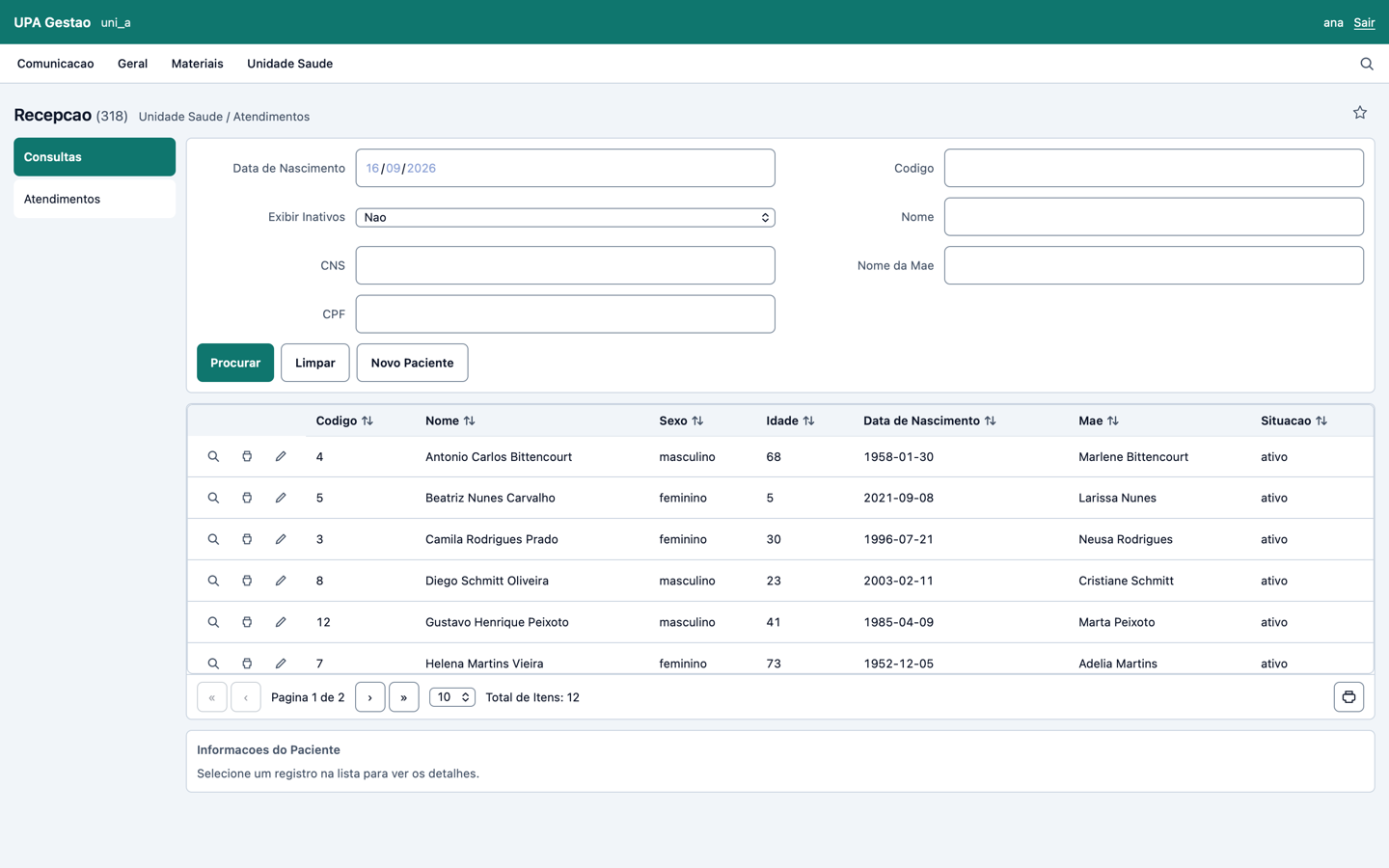
At the front desk
Care starts at registration: the front desk looks the patient up by name, national health card or tax ID, checks the national database and registers on the spot anyone not yet on file.
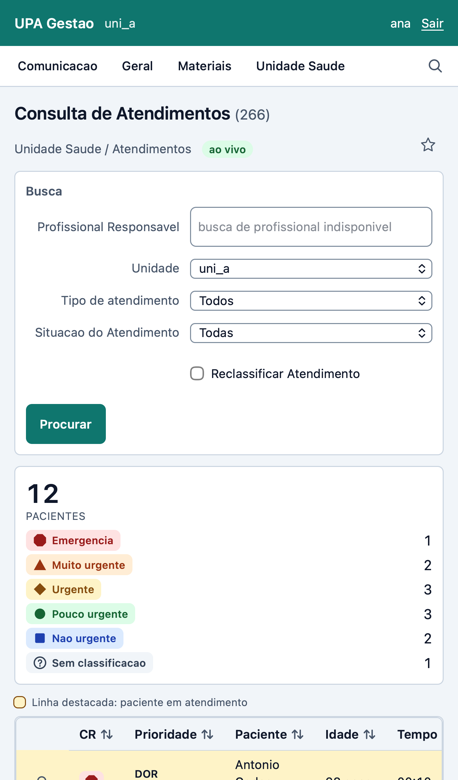
From there come the patient label and the day's queue, showing who arrived, how long each person has waited and which stage their care is in.
In triage
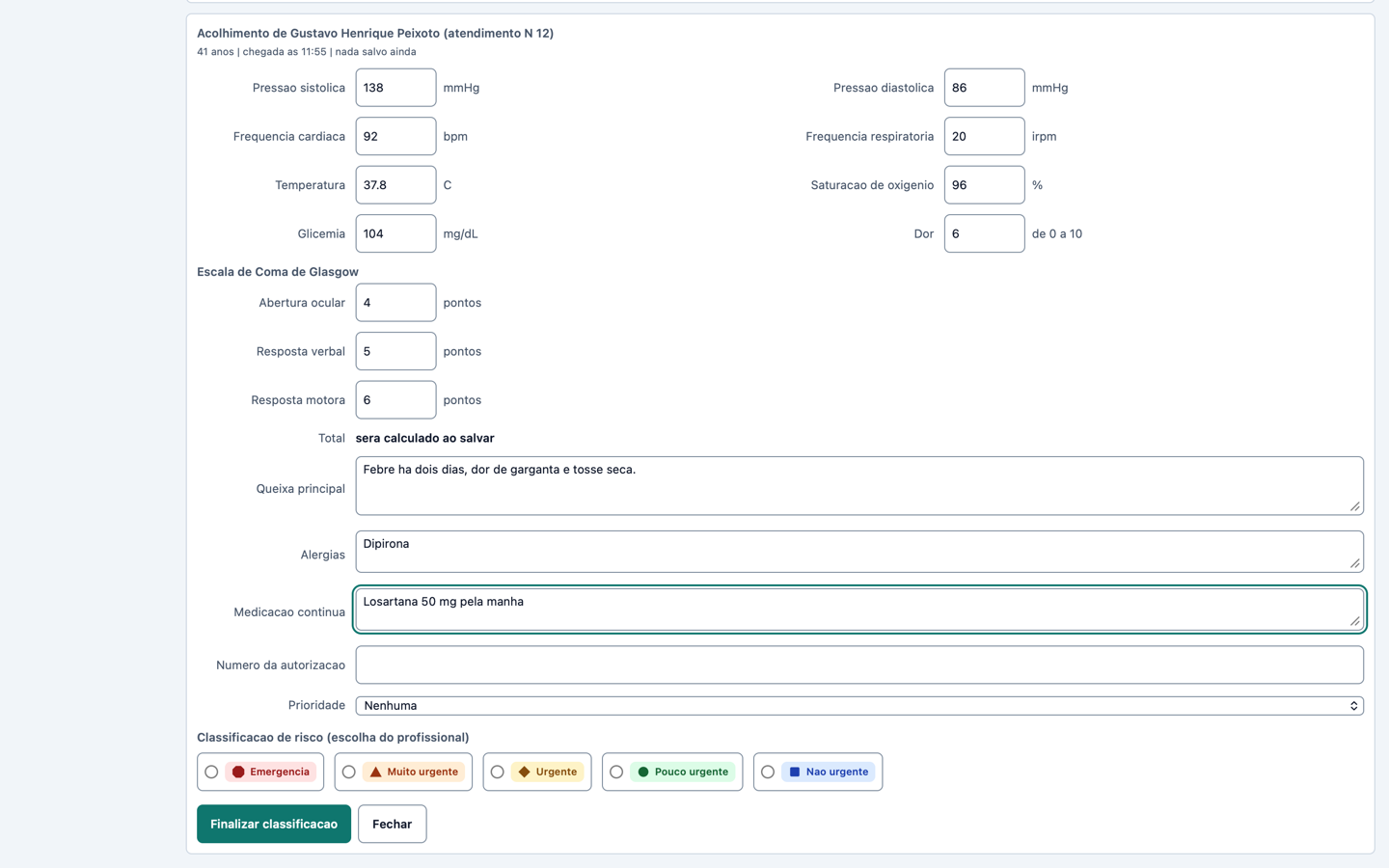
Nursing opens the record of whoever is waiting to be triaged and enters blood pressure, heart and breathing rates, temperature, oxygen saturation, blood sugar, pain, Glasgow scale, main complaint, allergies and current medication.
On closing the record, the nurse picks the risk colour. From then on the colour follows the patient through the queue and the consultation, next to legal priorities such as older adults, pregnant women and infants.
In the consulting room
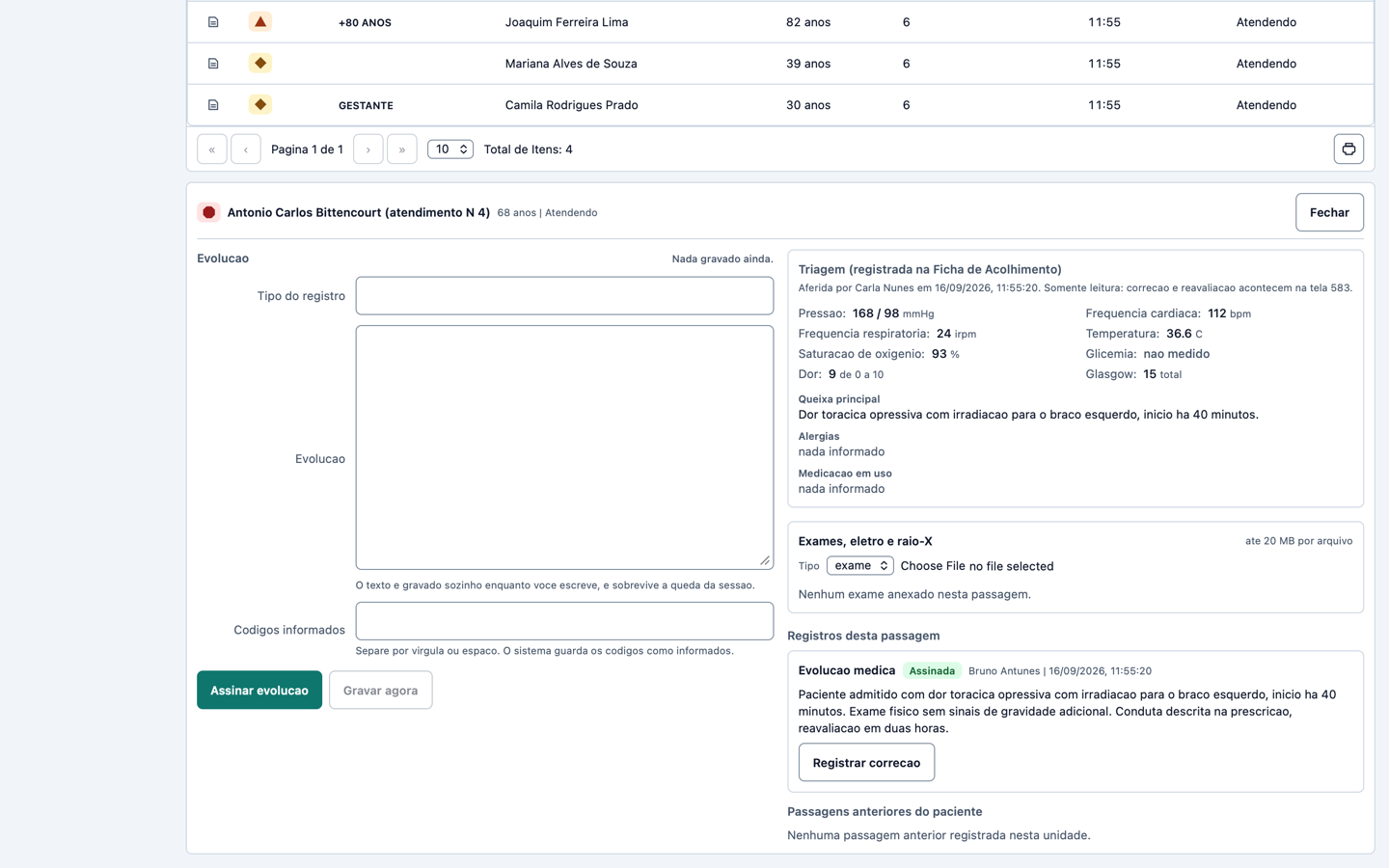
The doctor opens the patient and sees, on the same screen, everything triage recorded, including the complaint the patient arrived with and the time the readings were taken.
He writes the clinical note, enters the diagnosis codes and signs it. A signed note can no longer be edited: a correction becomes a new note tied to the previous one. Prescriptions come out of the same consultation, and dispensing talks to the unit's stock.
In the waiting room and in management
The call shows up on the waiting room display with the patient's name and the room to go to, alongside earlier calls, for anyone who missed it the first time.
Management pulls the period's reports on screen: case profile by risk, outcome, professional or time of day, daily bulletin, average time and notifiable conditions. What used to end up in a spreadsheet comes out ready.
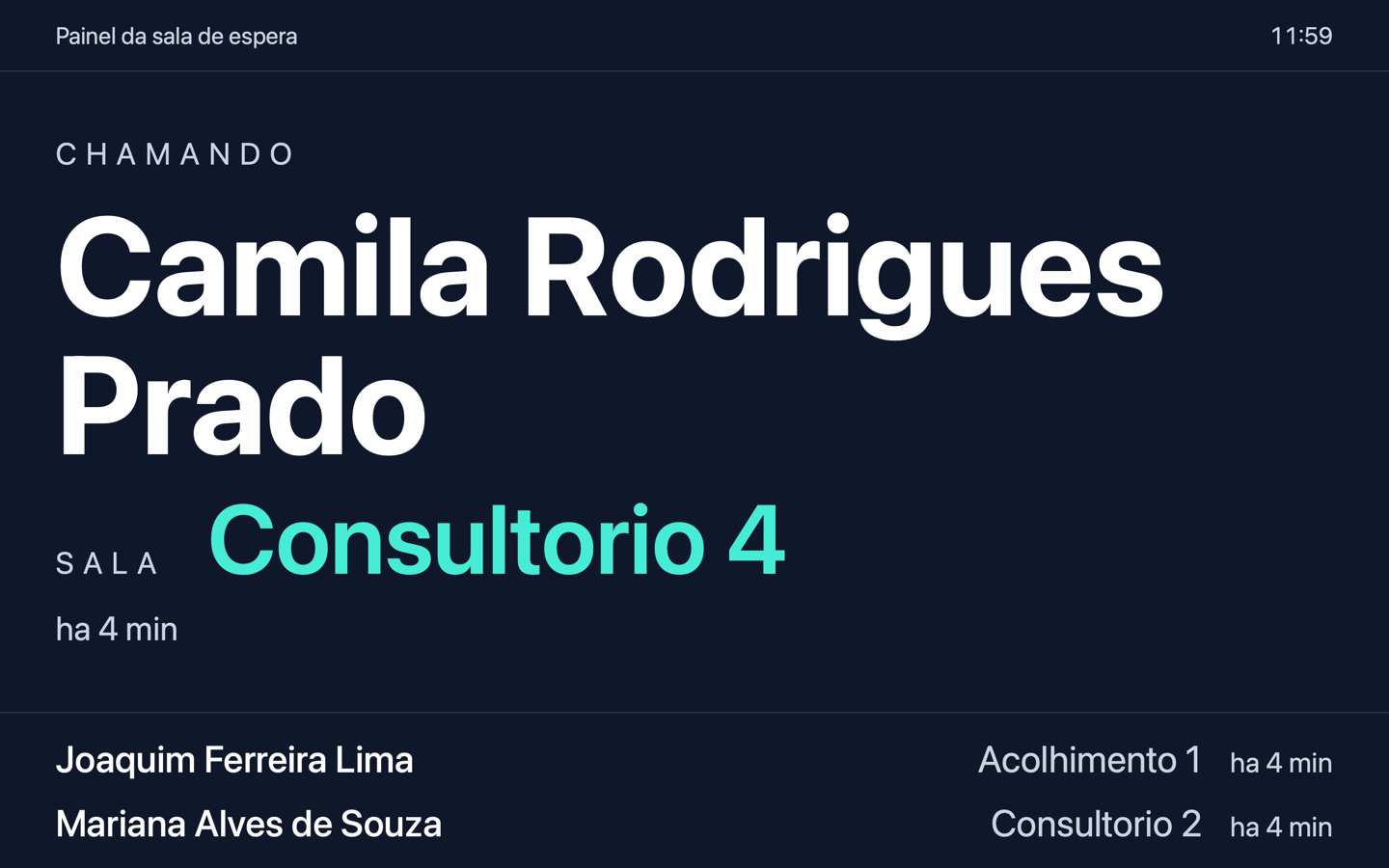
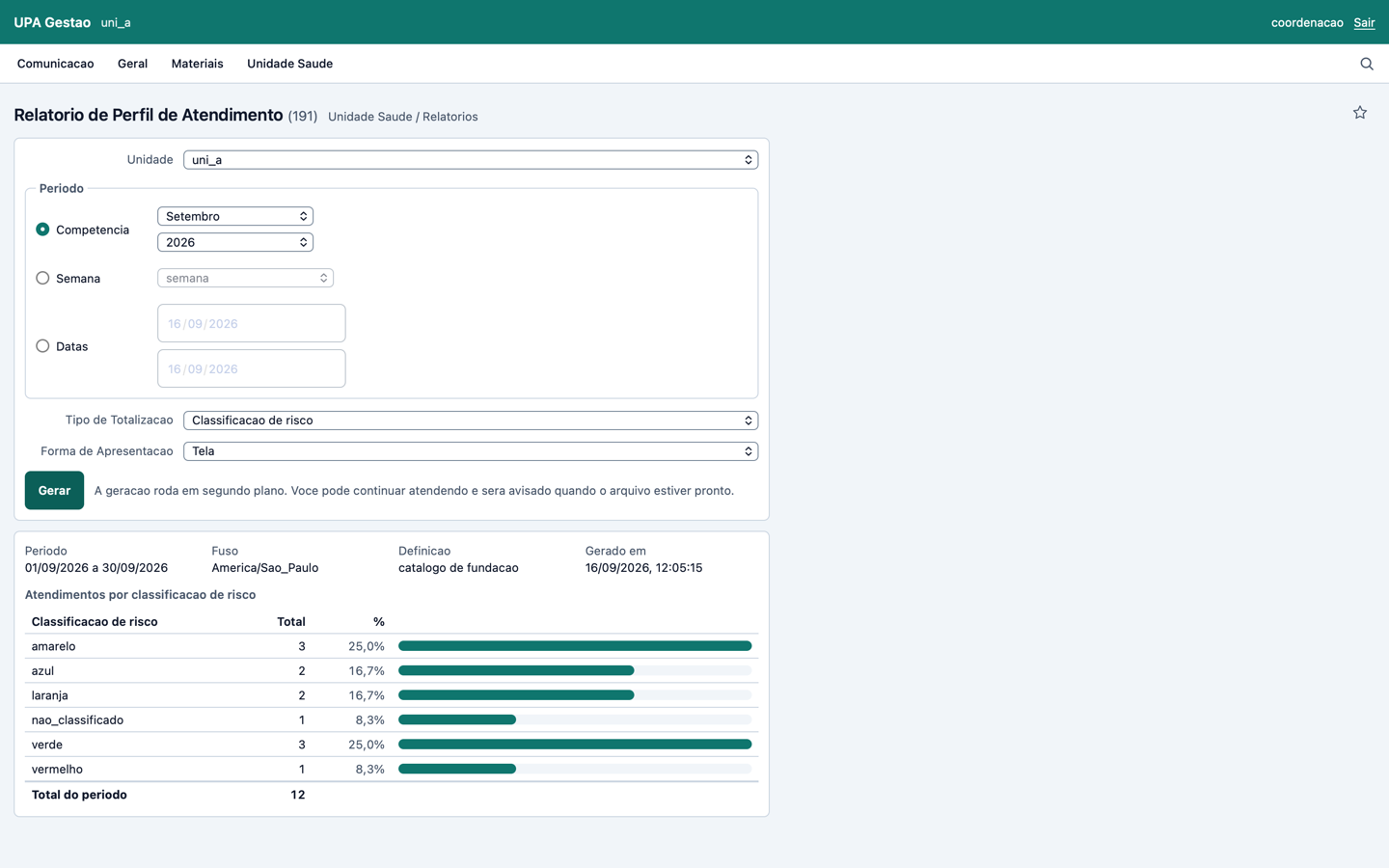
Product screens with demonstration data.
What we are delivering
- Patient reception and registration integrated with CAD-SUS and the National Health Card
- Triage and a queue ordered by clinical priority, with a call display
- Medical care and electronic health records with concurrent use
- Prescriptions, pharmacy and inventory
- Reports, indicators and mandatory disease notifications
- Access profiles, audit trail and LGPD compliance
Technology
Back end: Node with Fastify and TypeScript, PostgreSQL with Drizzle, Argon2id password hashing, JWT sessions, permissions checked on every request and an append-only audit trail.
Front end: React with Vite and TypeScript, TanStack Router, Query and Table, Tailwind CSS and shared Zod contracts across both ends.
Related serviceCustom software development